
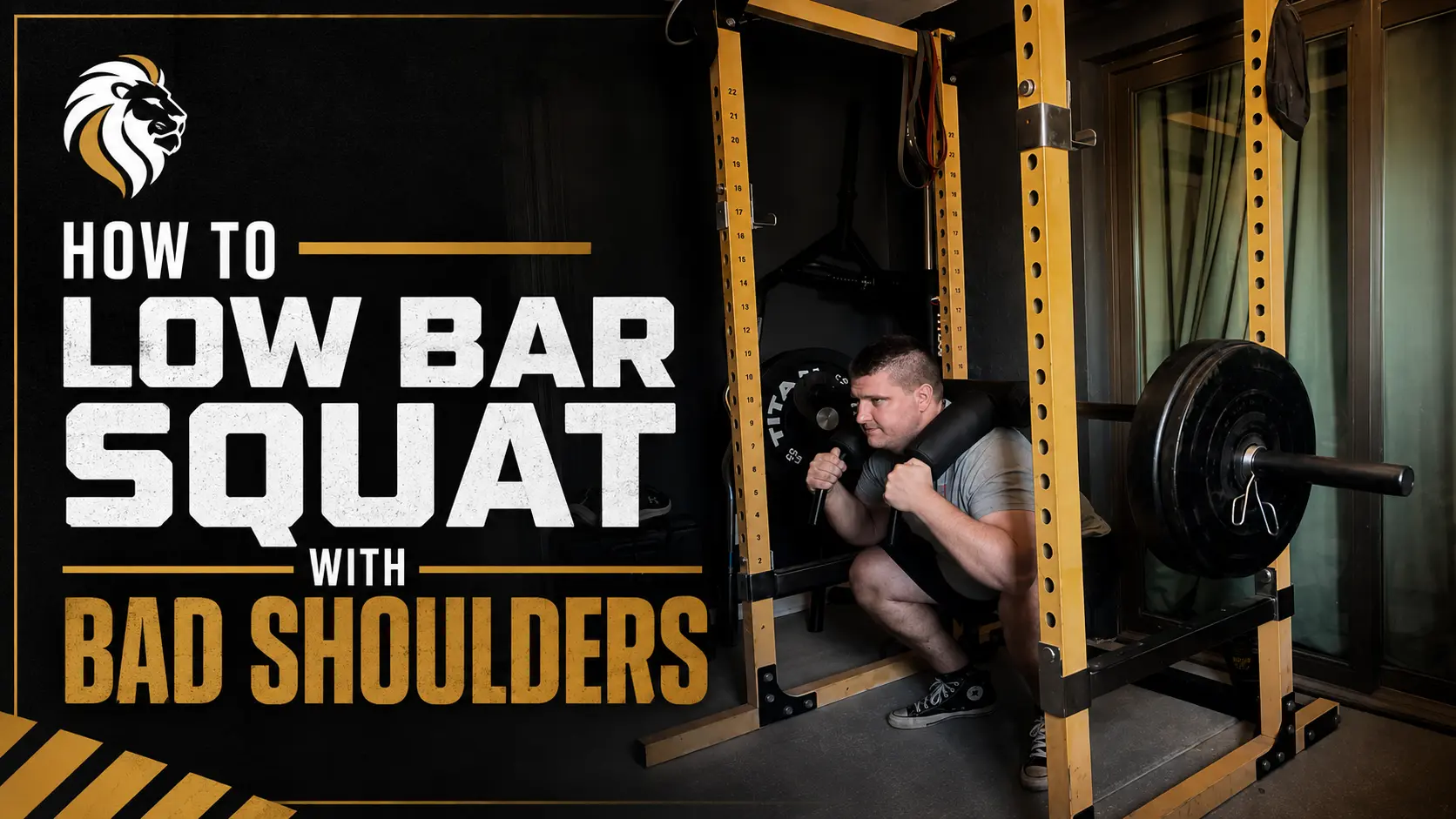
Low bar squats are one of the best ways to build serious lower body strength and muscle.
They let you load heavy weight, use more hip drive, involve the posterior chain, and usually allow stronger lifters to move more weight than a high bar squat.
But there is one big problem.
Low bar squats can absolutely suck if you have shoulder issues.
For some lifters, the hardest part of the low bar squat is not the squat itself. It is getting into position under a straight bar without irritating the shoulders, elbows, wrists, or biceps tendon.
That is where the Kabuki Strength Transformer Bar comes in.
This bar lets me train a low bar-style squat pattern without forcing my shoulders into the brutal position required by a normal straight bar low bar squat.
And that matters, because the goal is not to be loyal to one barbell no matter what.
The goal is to keep training hard.
The Problem With Regular Low Bar Squats
The regular low bar squat demands a lot from your upper body.
To get into position, you usually need to pull your shoulders back, externally rotate hard, crank your elbows into place, and wedge the bar tightly across your rear delts.
If your shoulders are healthy, that may not be a big deal.
But if you have old shoulder injuries, cranky pressing shoulders, biceps tendon irritation, elbow pain, wrist pain, or just beat-up joints from years of lifting, the low bar position can feel worse than the actual squat.
That is the frustrating part.
Your legs might be ready to squat.
Your hips might be ready to squat.
Your back might be ready to squat.
But your shoulders are the thing stopping you from getting under the bar.
That is not a leg strength problem. That is a setup problem.
And it held me back for YEARS.
Low Bar Squats Should Not Wreck Your Shoulders
A lot of lifters make the mistake of thinking they have to force the movement no matter what.
They think if low bar hurts, they just need to stretch more, shove their hands in tighter, tough it out, or keep hammering the same painful position until their body adapts.
Sometimes mobility work helps.
Sometimes adjusting your grip helps.
Sometimes widening your hands helps.
But sometimes the straight bar low bar position is just not worth the cost.
If every squat session irritates your shoulders, elbows, wrists, or biceps tendon, that problem can start bleeding into the rest of your training.
Now your squat is bothering your bench.
Your bench is bothering your shoulders.
Your shoulders are bothering your rows.
And before you know it, one bar position is messing up your entire week of training.
That is stupid.
The squat is supposed to build you up, not slowly tear apart your upper body.
Why I Use the Kabuki Strength Transformer Bar
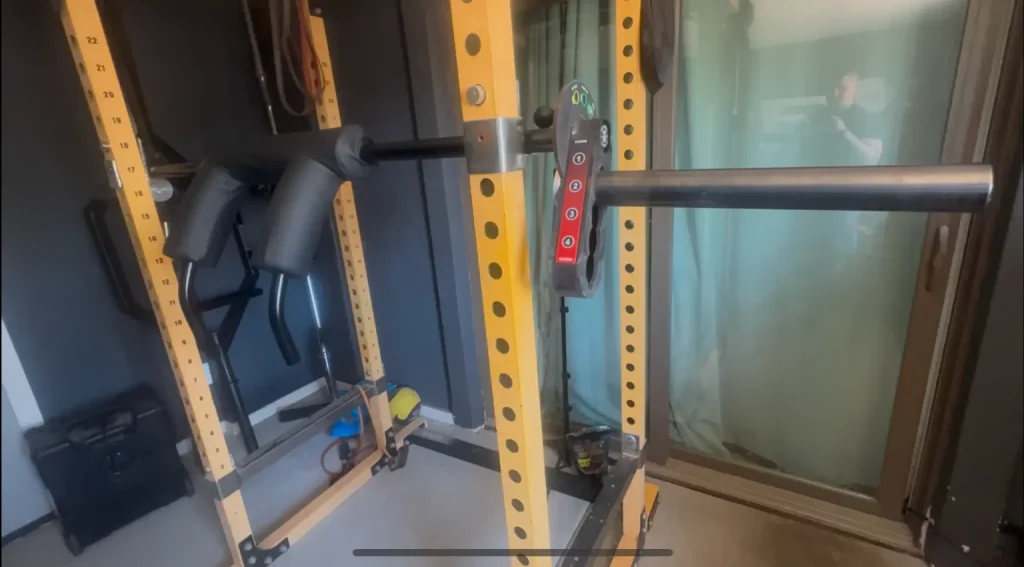
The Kabuki Strength Transformer Bar solves the biggest issue with low bar squatting for lifters with shoulder problems.
You do not have to reach back and grab a straight bar.
Instead, you get handles in front of your body.
That means your shoulders can stay in a much more comfortable position while you still load the squat heavy.
For me, that is the whole point.
I am not using the Transformer Bar because I want squats to be easy.
I am using it because I want to keep squatting hard without forcing my shoulders into a position they hate.
The Transformer Bar lets me train a low bar-style squat pattern while taking a lot of stress off the shoulders, elbows, and wrists.
That is a massive win.
How the Transformer Bar Mimics a Low Bar Squat
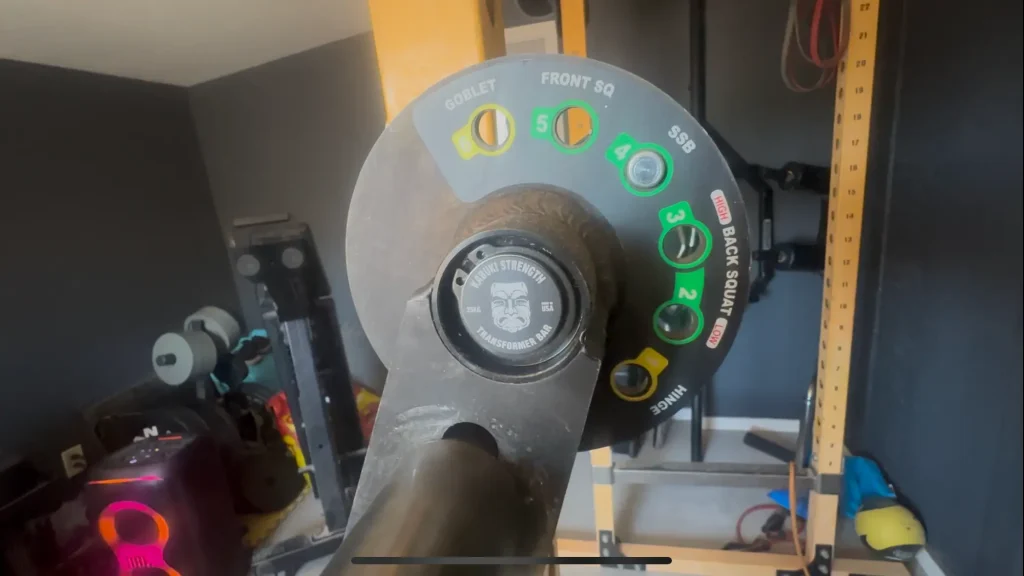
The Transformer Bar is not just a normal safety squat bar.
It has adjustable settings that change the feel of the movement.
Depending on how you set it up, you can make the squat feel more like a high bar squat, front squat, goblet squat, hinge pattern, or low bar squat.
For this setup, the goal is to mimic a low bar squat as much as possible.
A regular low bar squat usually has a slightly more hip-dominant feel than a high bar squat. The bar sits lower on the back, the torso leans forward more, and the hips contribute more to the lift.
With the Transformer Bar, I am trying to keep that same general pattern.
I still want to squat heavy.
I still want to use my legs, hips, and back.
I still want the movement to feel like serious strength training.
I just do not want my shoulders to be the limiting factor before my legs ever get challenged.
This Is Not Cheating
Some lifters get weird about specialty bars.
They act like if you are not using a straight bar, it does not count.
I think that is nonsense.
The weight is still on your back.
You still have to brace.
You still have to control the descent.
You still have to hit depth.
You still have to drive out of the hole.
You still have to actually squat the weight.
A specialty bar does not remove the work. It removes the unnecessary joint stress that may be stopping you from doing the work in the first place.
That is not cheating.
That is smart training.
If a bar lets you train harder, stay healthier, and make progress for longer, that is a good tool.
How I Set Up for the Transformer Bar Low Bar Squat
The setup is simple.
First, I set the Transformer Bar to the low bar squat position.
Then I rack it around normal squat height, get under the pads, grab the handles, and get tight before I unrack the weight.
The handles are the big advantage, but you still cannot get lazy.
You still need to brace hard.
You still need to keep your upper back tight.
You still need to create full body tension before you unrack.
Just because the bar is more comfortable on your shoulders does not mean you can treat it like a casual machine exercise.
It is still a squat.
Treat it like one.
Squatting With the Transformer Bar
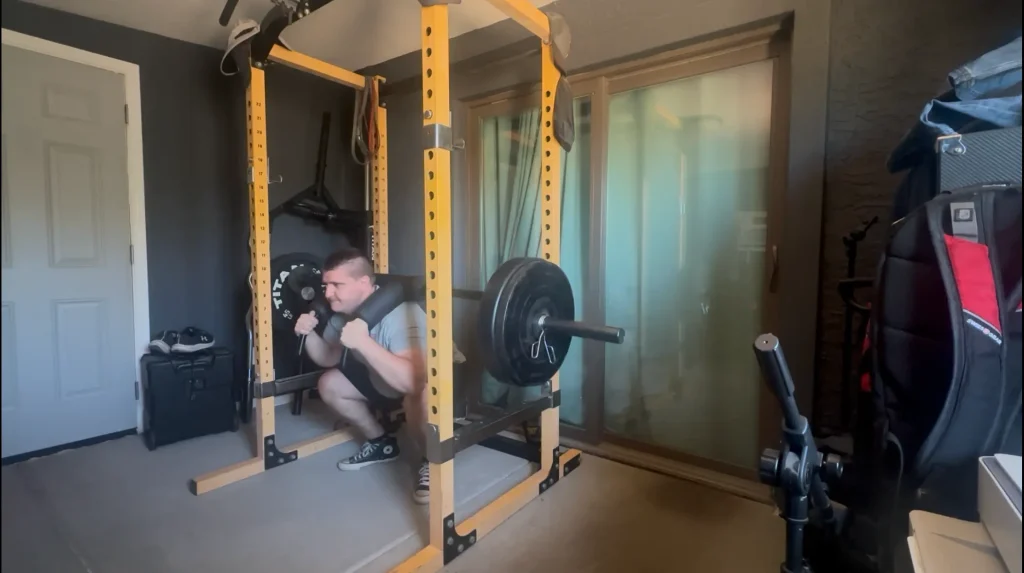
Once the bar is unracked, I keep the movement the same as any other squat.
I use my normal stance.
I brace hard.
I sit down and back slightly.
I let my hips contribute.
Then I drive through the floor and stand up strong.
The goal is not to turn the movement into something completely different.
The goal is to train the low bar squat pattern without getting punished by the straight bar shoulder position.
That is the difference.
I am not trying to avoid hard training.
I am trying to remove the one part of the lift that causes unnecessary pain.
Does It Feel Exactly Like a Straight Bar Low Bar Squat?
For the most part… YES.
But not 100%.
Holding the handles tight so the bar does flip off of your back feels a little strange at first.
BUT…
I would rather use a slightly different bar and keep squatting consistently than force a straight bar position that irritates my shoulders and eventually makes me skip squats altogether.
Perfect is not the goal.
Progress is the goal.
Who Should Try This?
This setup makes sense if regular low bar squats bother your shoulders before your legs ever get challenged.
It you have:
- old shoulder injuries
- cranky elbows
- wrist discomfort
- biceps tendon irritation
- poor shoulder mobility
- pressing-related shoulder pain
The Kabuki Transformer bar is absolutely for you.
The Real Goal Is Long-Term Training
The biggest mistake lifters make is getting emotionally attached to one version of a lift.
Straight bar low bar squat.
Straight bar bench press.
Straight bar overhead press.
Conventional deadlift.
Whatever it is, they act like the exact version of the lift matters more than the actual result.
I do not see it that way.
The goal is to build muscle.
Get stronger.
Train hard.
Stay healthy.
And keep doing it for years.
If a specialty bar helps you do that, use it.
The Transformer Bar is not a magic fix. You still need good technique, smart loading, and proper progression.
But if shoulder pain is the thing keeping you from low bar squatting, this bar can be a serious game changer.
Disclaimer: This article is for educational purposes only and is not medical advice. If you have serious pain or an injury, talk to a qualified medical professional.