
Not every workout feels good.
Some days you walk into the gym and everything clicks.
The weights feel light.
Your joints feel great.
Your energy is high.
Other days, something just feels off.
Maybe your shoulder doesn’t like pressing.
Maybe your squat feels awkward.
Maybe your lower back feels tight.
Maybe a movement that felt great last week suddenly feels terrible.
Most lifters make one of two mistakes.
They either force the movement anyway.
Or they quit the workout entirely.
Both are usually bad decisions.
Don’t Force a Bad Exercise
One of the fastest ways to get hurt is trying to force an exercise that clearly isn’t working that day.
I’m not talking about normal training discomfort.
I’m talking about when something feels wrong.
Sharp pain.
Joint irritation.
A muscle strain.
A movement pattern that feels unstable.
If your body is throwing up warning signs, listen.
One workout isn’t worth a six-week injury.
If something genuinely hurts, stop doing it.
There is no trophy for being stubborn.
Try Another Variation
Recently I walked into the gym planning to do regular deadlifts.
The problem was they didn’t feel right.
My back felt off.
The setup felt awkward.
Nothing was clicking.
A lot of people would have packed it up and called it a bad training day.
Instead, I switched exercises.
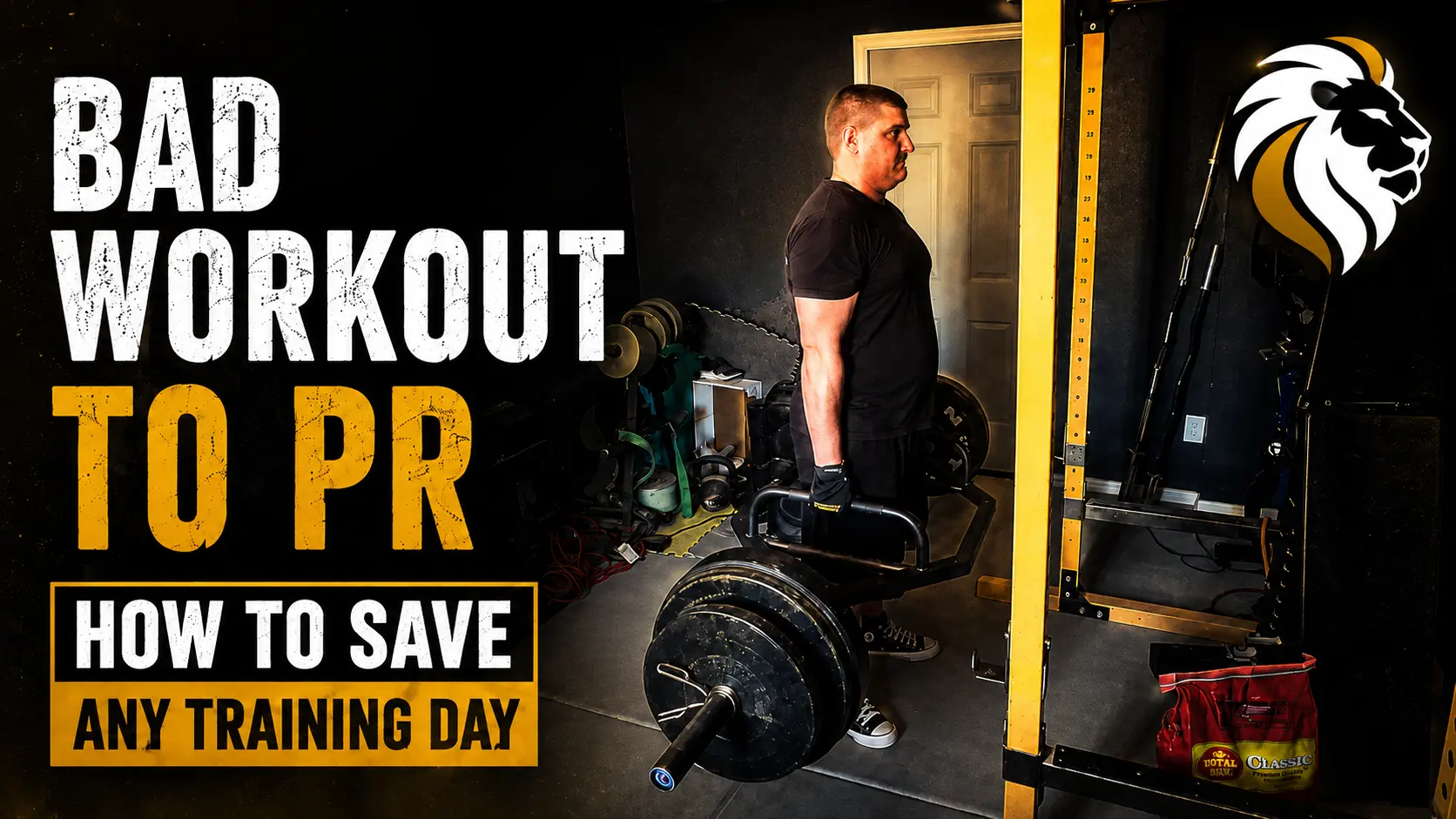
I moved over to the trap bar and started pulling with the high handles.
Immediately everything felt better.
The movement felt natural.
The strength was there.
The discomfort was gone.
What started as a bad workout turned into a personal record.
Not because I forced the original plan.
Because I adjusted.
Sometimes You Have to Experiment
One thing I’ve learned over years of training is that your body doesn’t always read the program.
Sometimes Exercise “A” feels amazing.
Sometimes Exercise “A” feels like dog shit and Exercise “B” feels great.
There isn’t always a perfect scientific explanation.
You’re not a robot.
Stress changes.
Sleep changes.
Recovery changes.
Life happens.
Instead of forcing one movement, try another.
If squats feel bad, try a safety squat bar.
If bench press feels bad, try an angled multi-grip bar.
If conventional deadlifts feel bad, try a trap bar.
Sometimes it takes two or three exercise changes before you find what feels good that day.
That’s okay.
Keep looking.
Once You Find It, Hammer It
When you find the movement that feels good, train it hard.
Get your work in.
Push the sets.
Push the reps.
Challenge yourself.
A successful workout isn’t determined by whether you performed the exact exercise written on the program.
A successful workout is determined by whether you trained the target muscles safely and productively.
The goal is progress.
Not perfection.
Know the Difference Between “Hard” and “Pain”
This is where people get themselves into trouble.
Training is supposed to be hard.
Effort is supposed to be uncomfortable.
Heavy weights are supposed to challenge you.
That doesn’t mean you should ignore pain.
Learn the difference.
A hard set burns.
A hard set is exhausting.
Pain feels different.
Pain feels wrong.
If you feel something straining, tearing, pinching, or becoming unstable, stop.
Rest it.
Train around it.
Come back another day.
The gym will still be there tomorrow.
Final Thoughts
Bad workouts don’t always have to stay bad.
Sometimes the answer isn’t quitting.
Sometimes the answer isn’t forcing the original plan either.
Sometimes the answer is simply changing exercises until you find something that feels right.
Listen to your body.
Stay flexible.
Train hard when you can.
Back off when you need to.
And remember:
The best workout is the one that lets you come back healthy and train again tomorrow.