
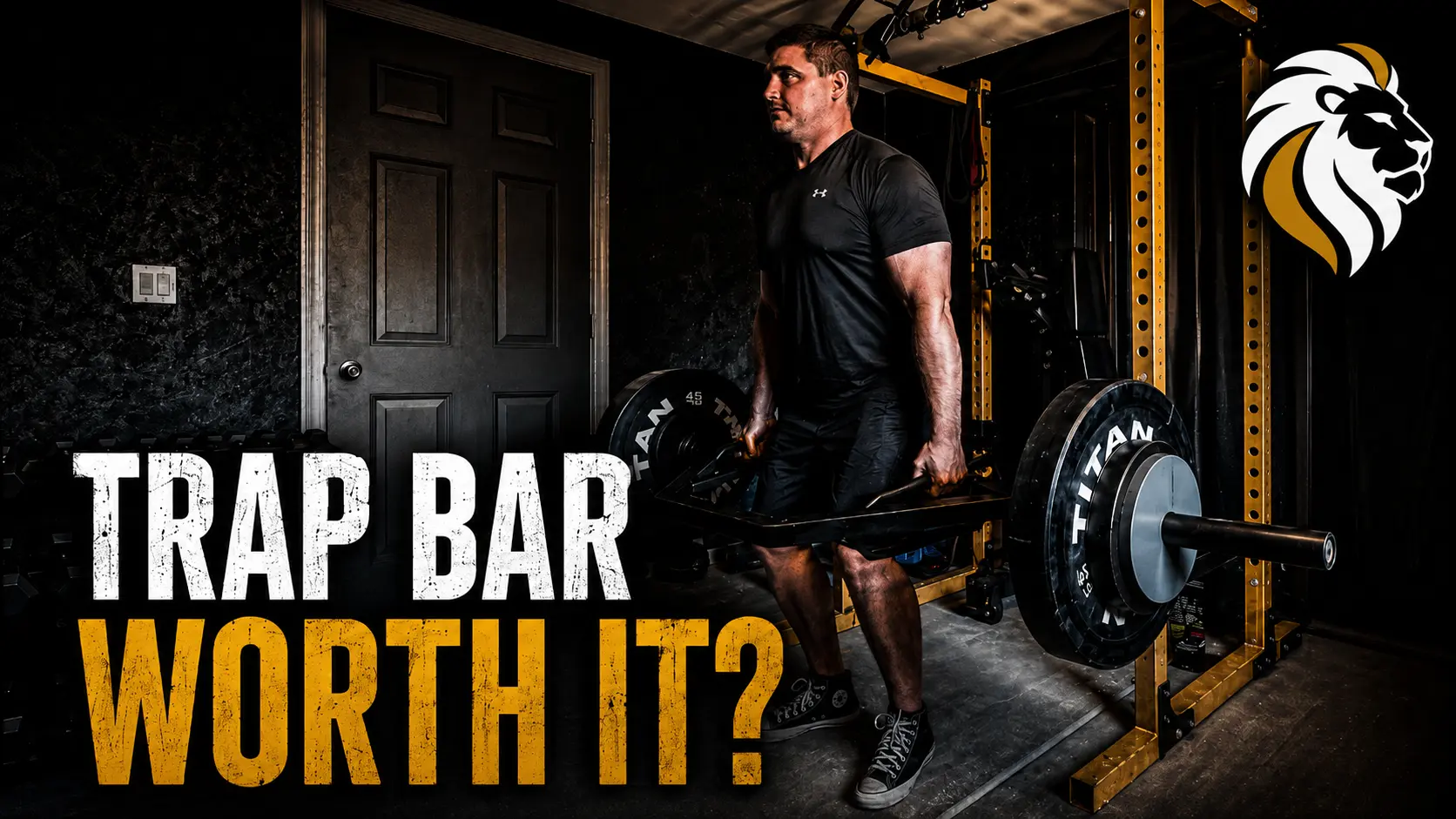
The trap bar has become one of the most controversial pieces of equipment in strength training.
Some coaches love it.
Others claim it’s dangerous, useless, or nothing more than a glorified squat.
You’ll often hear arguments that the trap bar doesn’t build the posterior chain properly, doesn’t carry over to a conventional deadlift, or removes too much of the challenge that makes the deadlift valuable in the first place.
After using one consistently for the last several months, my experience has been very different.
For me, the trap bar helped rebuild my deadlift, allowed me to train around injuries, and became one of the most useful tools in my gym.
Why I Bought a Trap Bar
A while back, regular straight-bar deadlifts started bothering my lower back.
Nothing catastrophic.
The movement simply wasn’t feeling right.
Instead of forcing the issue, I decided to experiment with a trap bar.
What immediately stood out was how much easier it was to engage my legs during the pull. The more upright torso position felt natural, and the movement allowed me to train hard without aggravating the issues I was dealing with at the time.
Rather than abandoning deadlifting altogether, the trap bar gave me a way to keep pulling from the floor while building confidence back into the movement.
It Helped Me Rebuild My Deadlift
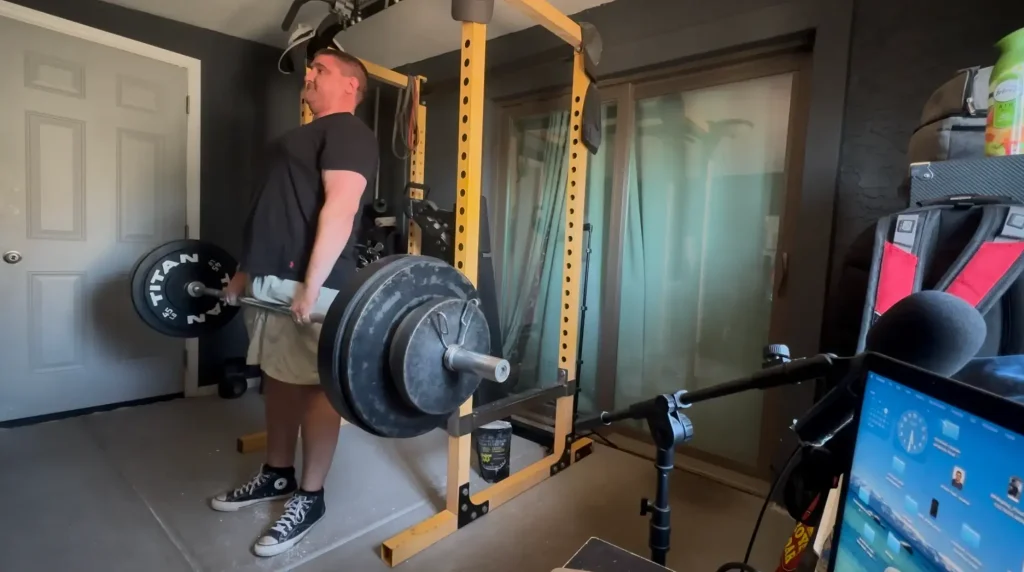
One of the biggest surprises was how much carryover I experienced when I returned to straight-bar deadlifting.
After spending time training with the trap bar, I eventually went back to conventional deadlifts.
No back pain.
No hesitation.
No rebuilding period.
In fact, I recently hit a new personal record.
For me, the trap bar wasn’t a replacement for deadlifting.
It was a bridge that helped me get back to deadlifting.
That’s why I don’t buy into the argument that the trap bar has no value for someone trying to improve their conventional pull.
Maybe that hasn’t been everyone’s experience.
It was definitely mine.
The Trap Bar Helped Me Train Around Bicep Tendonitis
Another unexpected benefit was how useful the trap bar became during a flare-up of bicep tendonitis.
Because you’re gripping the handles with a neutral grip and standing inside the bar, there is less stress placed on the biceps compared to many straight-bar pulling movements.
This allowed me to continue training heavy while managing the irritation in my right bicep.
Instead of taking weeks off from pulling movements, I was able to keep training productively.
For lifters dealing with similar issues, that alone can make the trap bar worth owning.
Trap Bar Rows Are Underrated
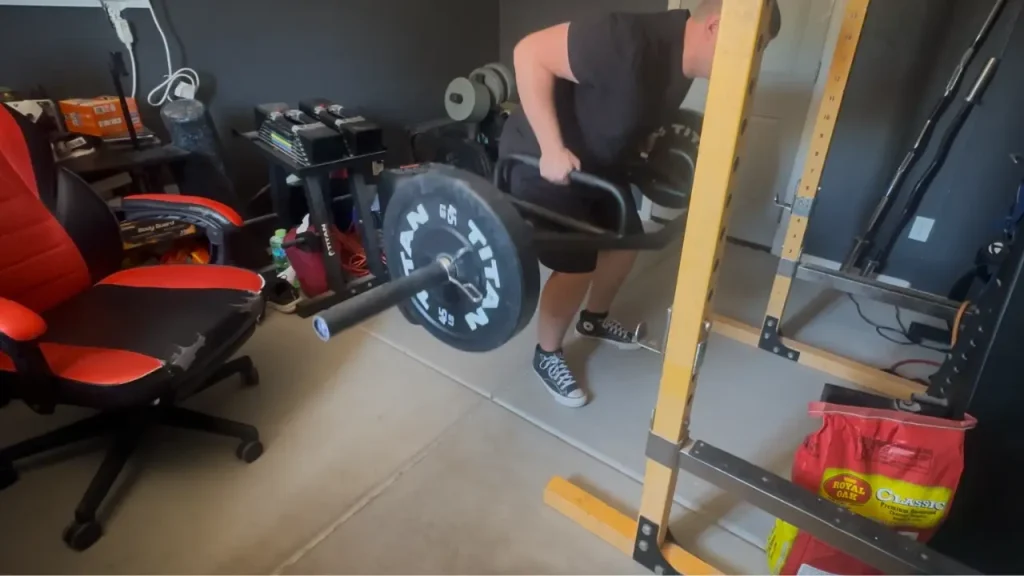
Most people think of the trap bar as a deadlift tool.
I actually think it’s just as useful for rows.
Regular trap bar rows feel great.
Even better, Pendlay rows from the floor with a trap bar have become one of my favorite exercises.
The neutral grip feels natural, the range of motion is excellent, and the movement allows me to load the exercise heavily without irritating my joints.
If you’re someone who enjoys rowing frequently, a trap bar can add a lot more variety than most people realize.
The One Thing I Don’t Like About the Trap Bar
The only feature I don’t enjoy is pulling from the low handles.
To me, the movement starts feeling much more like a squat than a deadlift.
I also haven’t experienced the same carryover to my conventional deadlift that I get from high-handle pulls.
Even worse, low-handle deadlifts can become unstable if you’re not perfectly centered inside the bar.
If your grip placement is slightly off or your body isn’t positioned evenly, the bar can tip or shift as it breaks from the floor.
When heavy weight is involved, that sudden movement can feel aggressive and unpredictable.
That’s not a reason to avoid low-handle deadlifts entirely, but it is a reason to pay close attention to your setup and positioning.
Is the Trap Bar Worth It?
For me, absolutely.
The trap bar helped me:
- Rebuild my deadlift
- Train around lower back discomfort
- Continue pulling through bicep tendonitis
- Add effective rowing variations
- Train heavy with less wear and tear
- Return to straight-bar deadlifting stronger than before
Is it a replacement for every deadlift variation?
No.
Does it make the conventional deadlift obsolete?
Not even close.
But strength training isn’t about loyalty to a specific piece of equipment.
It’s about finding tools that help you train consistently, stay healthy, and continue getting stronger.
The trap bar has done exactly that for me.
If your gym has one, use it.
If you’re building a home gym and enjoy deadlifting, rowing, or pulling from the floor, it’s one of the few specialty bars that I believe is genuinely worth the investment.
Here is a link to the trap bar that I own: https://titan.fitness/products/rackable-hex-trap-bar-v3