

Bad shoulders do not mean you have to stop training hard.
They do not mean you have to quit squatting, stop pressing, abandon barbell training, or turn every workout into a 45-minute physical therapy circuit.
But they DO mean you need to stop forcing exercises your body clearly hates.
A lot of basic strength programs are built around the same few lifts: squat, bench press, overhead press, deadlift, and rows.
Programs like StrongLifts, Starting Strength, and 5/3/1 all work because they are simple. You focus on big movement patterns, add weight over time, and build strength.
That basic idea is great.
The problem is that the standard exercise selection does not work for everyone.
If your shoulders are beat up, the straight bar back squat, straight bar bench press, and barbell overhead press can become a nightmare. You might be strong enough to train hard, but your joints are the limiting factor. That is frustrating because your muscles still have work to do, but the bar position or movement pattern keeps lighting up your shoulders.
Trust me, I’ve been there… for years.
Until I got smart and changed my exercise selection.
This is not about training soft.
This is not about avoiding hard work.
This is about finding better tools and better variations so you can keep building muscle without constantly irritating your shoulders.
The Program Is Usually Not the Problem
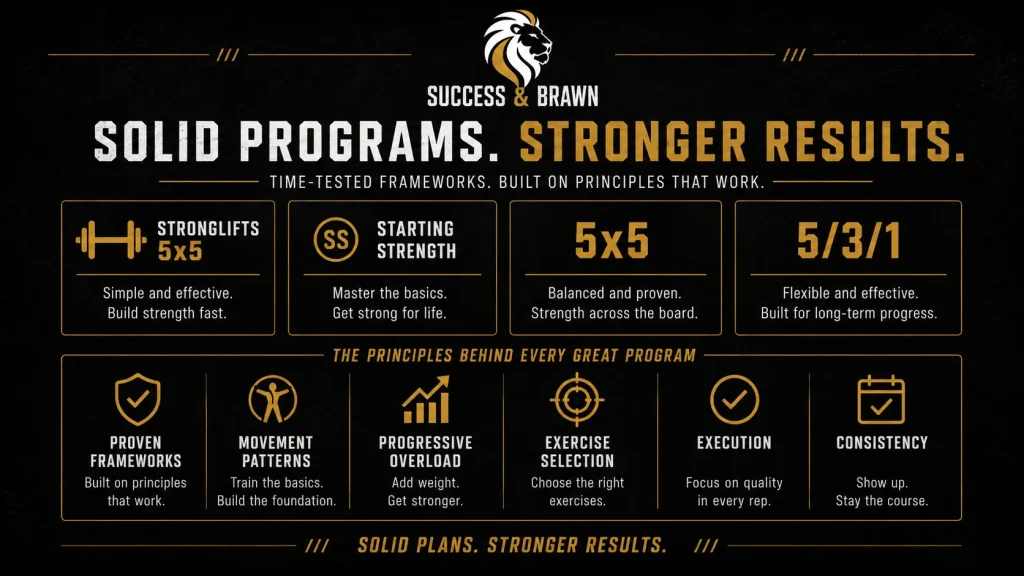
When people start dealing with shoulder pain, they often think the whole program is broken.
But the program may not be the issue.
The issue is the specific lifts.
A basic strength program is really just a framework:
- Squat pattern
- Pressing pattern
- Hinge/deadlift pattern
- Rowing/pulling pattern
- Progressive overload
That framework STILL WORKS even if you need to swap out certain exercises.
You do not need to worship one specific lift if that lift keeps beating you up. You need to train the movement pattern in a way your body can actually tolerate.
If straight bar squats wreck your shoulders, use a different squat variation.
If straight bar bench press irritates your shoulder, use a better pressing angle.
If barbell overhead press makes your shoulder feel like garbage, stop pretending it is mandatory.
The goal is not to prove how tough you are by forcing painful movements.
The goal is to build muscle and strength forever.
Why Barbell Overhead Press is the First Lift I Would Replace
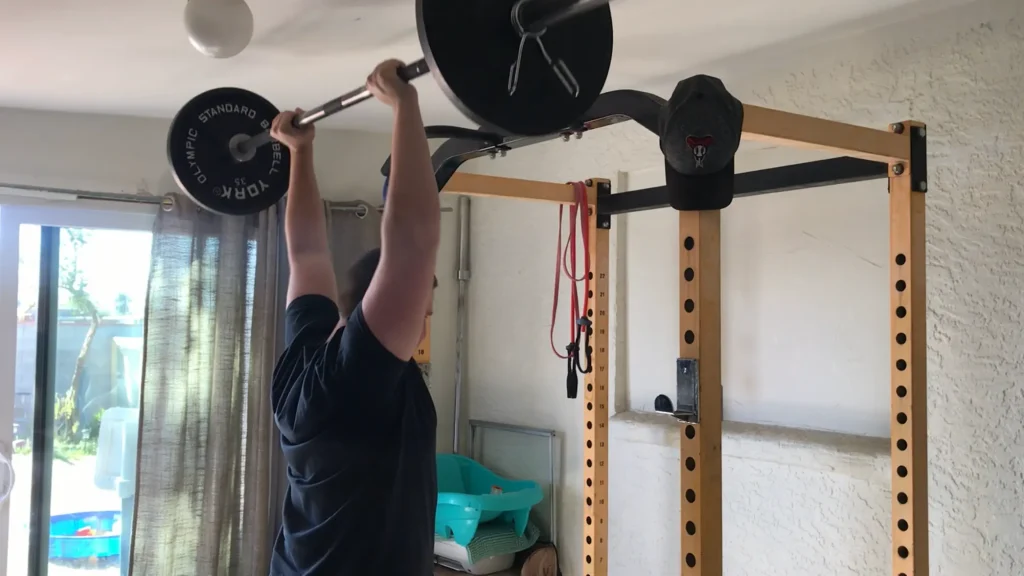
If your shoulders are already beat up, the barbell overhead press is one of the first lifts I would question.
Some people do great with it.
But if your shoulders do not like it, the overhead press can be absolutely brutal.
You are pressing straight overhead with a fixed bar path. Your shoulders need to move well. Your upper back needs to move well. Your shoulder blades need to rotate properly. If anything is off, the movement can feel awful or lead to massive injuries over time.
For me, this is not a lift I would force.
You do not need the barbell overhead press to build shoulders.
You do not need it to build muscle.
You do not need it to be strong.
There are other ways to train overhead pressing without constantly irritating your joints.
Overhead Press Fix: Neutral Grip Dumbbell Overhead Press
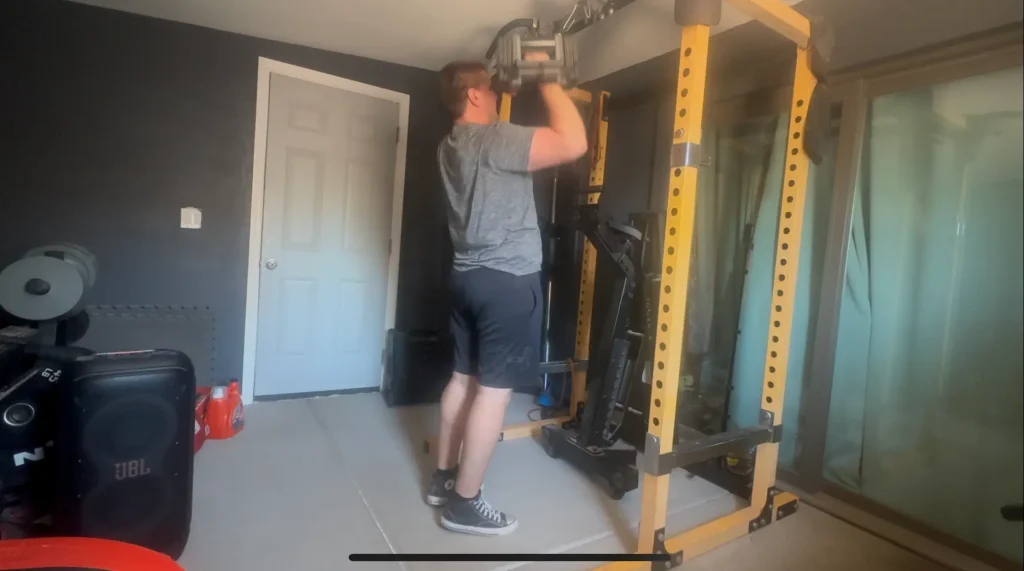
The neutral grip dumbbell overhead press is a much better option for a lot of lifters with bad shoulders.
Your palms face each other. Your elbows can stay in a better position. Your shoulders are not locked into the same rigid path as a barbell overhead press.
That freedom makes a massive difference.
You can press in a path that feels natural to your shoulders instead of forcing your shoulders to adapt to the bar.
This is one of my favorite overhead pressing substitutions because it still lets you train hard. You can still build your shoulders and triceps.
You can still progress.
You can still get stronger.
But you are doing it in a way your shoulders may actually tolerate.
That’s the whole point.
Why Straight Bar Squats Can Bother Bad Shoulders
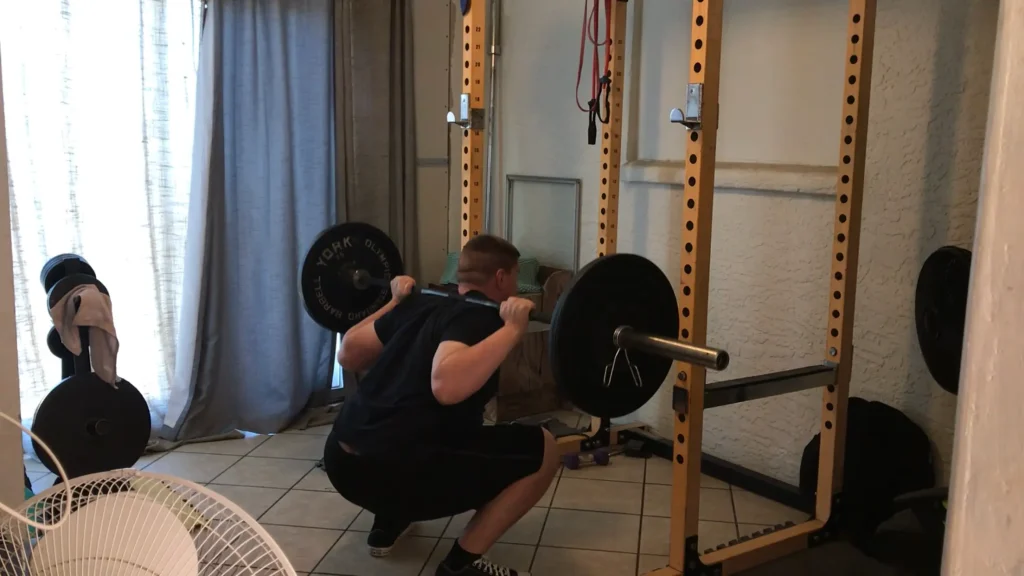
The straight bar back squat is one of the best strength exercises ever.
But for lifters with shoulder issues, the problem is not always the squat itself. The problem is the shoulder position required to hold the bar.
A low bar squat especially demands a lot from the shoulders. You have to externally rotate, crank your arms back, get tight under the bar, and hold that position while supporting serious weight.
If your shoulders are healthy, that may be fine.
If your shoulders are already irritated, that setup can be brutal.
You may feel pain before you even start squatting. Your legs might be ready to work, but your shoulders are screaming just from getting into position.
That is stupid.
Your shoulders should not be the thing stopping you from training your legs.
Squat Fix: Safety Squat Bar
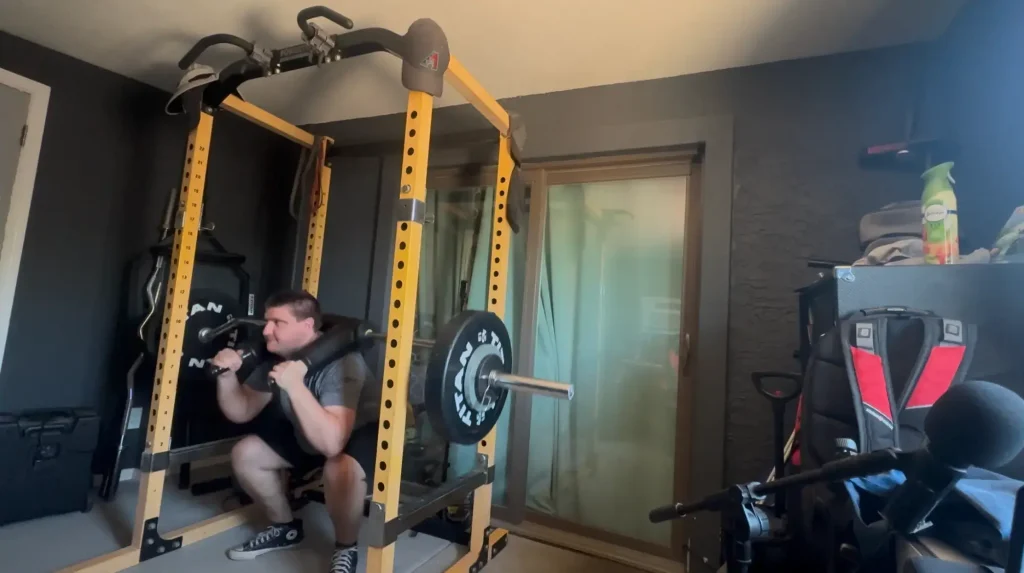
The safety squat bar is one of the best tools for lifters with bad shoulders.
Instead of forcing your hands behind you, the handles are in front of your body. That means you can keep your shoulders in a much more comfortable position while still loading the squat pattern hard.
You still get to train your legs.
You still get to squat heavy.
You still get to progress.
You just remove the shoulder position that was causing problems.
For a lot of lifters, this is the easiest straight bar squat replacement. It keeps the movement close enough to a real squat, but it removes the shoulder stress from holding the bar.
If straight bar squats are beating up your shoulders, the safety squat bar should be one of the first substitutions you try.
Squat Fix #2: Kabuki Transformer Bar
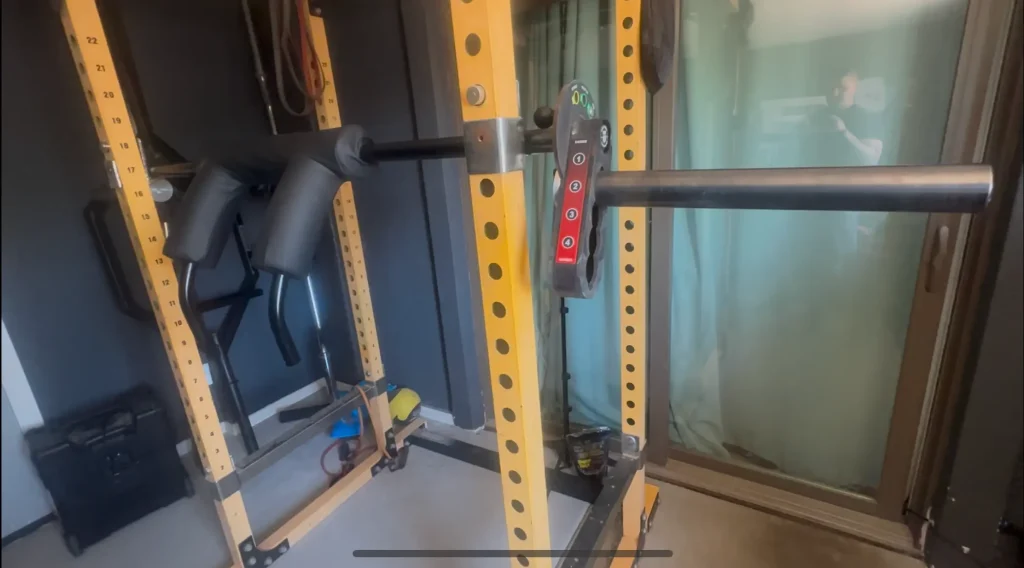
The Kabuki Transformer Bar is another great option because it gives you more ways to adjust the squat.
The big advantage is that you can change the loading position. Depending on the setting, the bar can feel more like a high bar squat, front squat, goblet squat, or something in between.
That matters because different lifters tolerate different positions better.
Some people feel better more upright.
Some people feel better with the load slightly shifted.
Some people need to change the movement just enough to stop irritating their shoulders, hips, knees, or lower back.
The Transformer Bar gives you options.
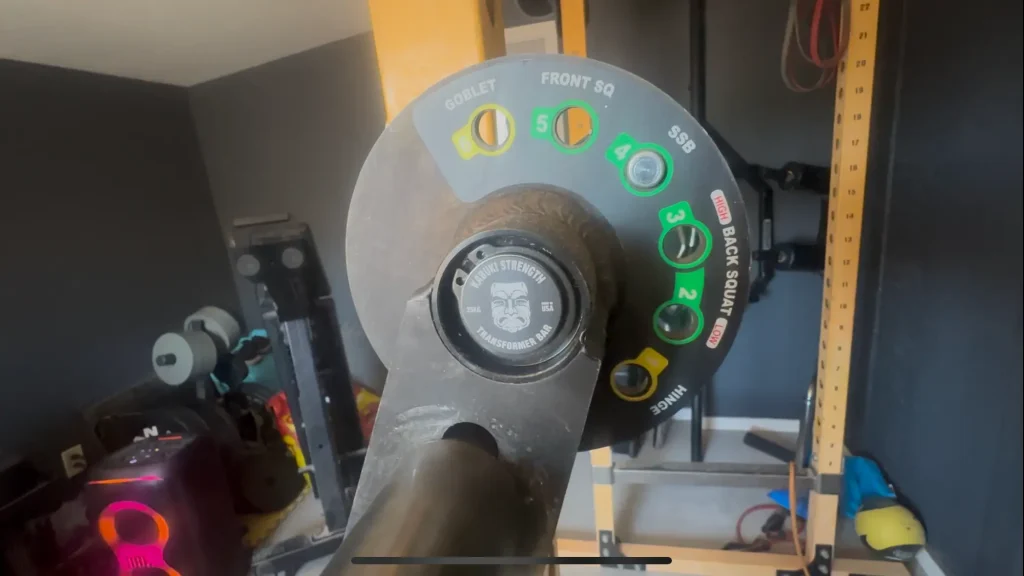
And when you are training around beat-up joints, options matter.
You are still squatting. You are still training hard. You are still building muscle. You are just using a better tool for your current body.
Why The Bench Press Can Be a Problem
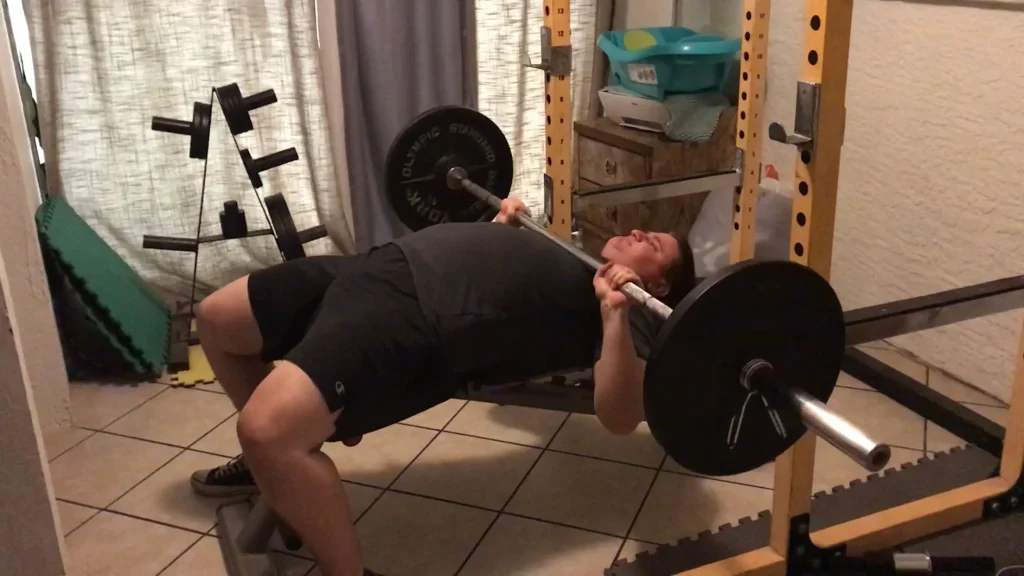
The straight bar bench press is another lift that can cause problems for lifters with bad shoulders.
Again, the exercise is not automatically bad.
But the fixed straight bar path can be unforgiving.
Your hands are locked into one position. Your shoulders have to follow the movement. If that exact path does not agree with your joints, the bench press can start feeling worse and worse over time.
Some lifters can bench forever with no issues.
Other lifters get shoulder pain every time they try to push the straight bar hard.
If you are in that second group, you do not need to quit pressing. You need to find a pressing variation that lets your shoulders move better.
Pressing Fix: Angled Multi-Grip Bar
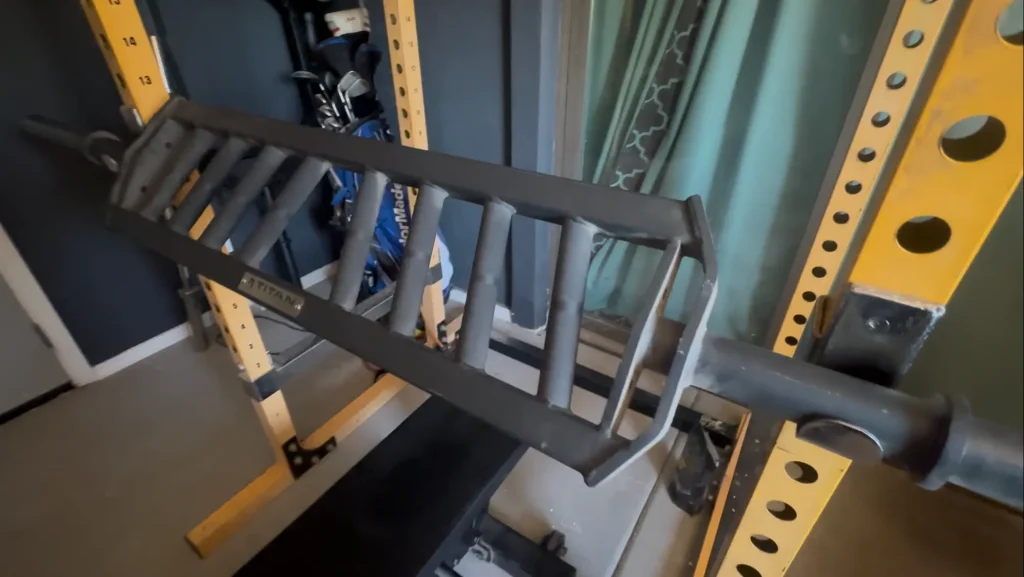
My favorite bench press replacement is the angled multi-grip bar.
This gives you a neutral or semi-neutral grip while still letting you press with a barbell-style movement. For many lifters, that grip feels much better on the shoulders than a straight bar.
The angled handles can let your elbows track more naturally.
You can still load the movement heavy.
You can still do progressive overload.
You can still train the pressing muscles hard.
For lifters who love barbell pressing but hate how the straight bar feels, a multi-grip bar can be a game changer.
This is the kind of tool that lets you keep the spirit of the bench press without forcing the exact version that caused problems in the first place.
What About Deadlifts and Rows?
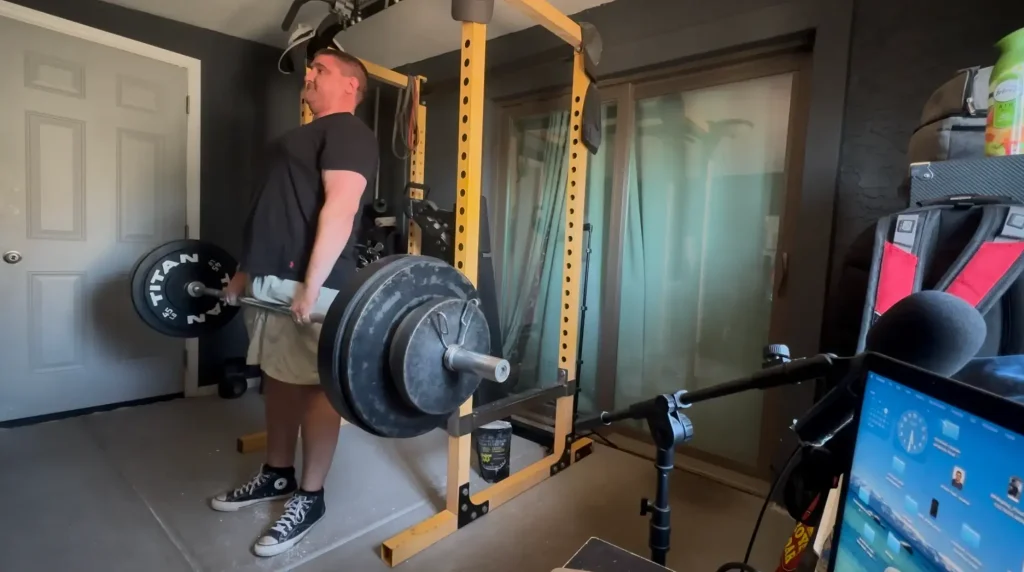
Deadlifts and rows may or may not bother your shoulders depending on your specific issues.
Some lifters can deadlift with a straight bar just fine.
Others find that straight bar pulling irritates their shoulders, elbows, biceps, or lower back.
If straight bar deadlifts feel good, you can keep them.
But if they bother you, a trap bar can be a great option.
The trap bar gives you a neutral grip.
That can be easier on the shoulders and biceps for some lifters. It also changes the pulling position and may help you use more leg drive instead of turning every pull into a lower-back-dominant grind.
The same idea applies to rows.
If straight bar rows irritate your arms or shoulders, try trap bar rows, chest-supported rows, dumbbell rows, or other neutral grip options.
The movement pattern matters more than the exact tool.
You need to train your back.
You do not need to prove anything to a straight bar.
How to Modify a Basic Strength Program With Bad Shoulders
Here is how I would think about modifying a simple barbell strength program if your shoulders are beat up.
Instead of this:
- Straight bar back squat
- Straight bar bench press
- Barbell overhead press
- Straight bar deadlift
- Straight bar row
You could use this:
- Safety squat bar squat or Transformer Bar squat
- Neutral grip dumbbell press or angled multi-grip bar bench press
- Neutral grip dumbbell overhead press
- Trap bar deadlift or straight bar deadlift if tolerated
- Trap bar row, dumbbell row, or chest-supported row
You are still training the same basic patterns.
You are still squatting.
You are still pressing.
You are still pulling.
You are still building muscle.
You are just choosing variations that do not constantly beat up your shoulders.
Sample Shoulder-Friendly Strength Template
Here is a simple way to set it up.
Workout A
- Safety Squat Bar Squat or Transformer Bar Squat
- Neutral Grip Dumbbell Bench Press or Angled Multi-Grip Bar Bench Press
- Trap Bar Deadlift or Straight Bar Deadlift
Workout B
- Safety Squat Bar Squat or Transformer Bar Squat
- Neutral Grip Dumbbell Overhead Press
- Trap Bar Row, Dumbbell Row, or Chest-Supported Row
You could run this with a basic progression style.
Add weight when the reps feel good.
Keep form clean.
Do not grind through pain.
Progress slowly enough that your joints can keep up with your muscles.
That is the part a lot of lifters miss.
Your muscles might be strong enough to push harder, but your joints and connective tissue still have to tolerate the training.
Pain-free progression beats perfect exercise selection.
This Still Works With StrongLifts, Starting Strength, or 5/3/1
If you like programs like StrongLifts, Starting Strength, or 5/3/1, you do not have to throw the entire idea away.
You just modify the lifts.
The principles still work:
- Train big movements
- Use progressive overload
- Keep the program simple
- Track your lifts
- Get stronger over time
The difference is that you are not forcing the exact standard barbell lifts if they keep irritating your shoulders.
A safety squat bar squat can replace a straight bar squat.
A neutral grip dumbbell press can replace a straight bar bench press.
A neutral grip dumbbell overhead press can replace a barbell overhead press.
A trap bar deadlift can replace a straight bar deadlift if needed.
The program does not fall apart because you made intelligent substitutions.
If anything, the program becomes more sustainable because you can actually train consistently.
Stop Thinking Every Exercise Is Mandatory
One of the biggest mistakes lifters make is treating certain exercises like they are mandatory.
They are not.
The straight bar squat is not mandatory.
The straight bar bench press is not mandatory.
The barbell overhead press is not mandatory.
They are tools.
Good tools, but still just tools.
If a tool works for you, use it.
If a tool keeps hurting you, stop acting like you have no other options.
There are many ways to build muscle and strength. The best exercise is not always the most famous one. The best exercise is the one that lets you train hard, progress, and stay healthy enough to keep showing up.
Do Not Turn This Into an Excuse to Train Easy
There is one important warning here.
Exercise substitutions are not an excuse to train like a coward.
If you replace the straight bar squat with a safety squat bar squat, you still need to train hard.
If you replace the bench press with neutral grip dumbbell pressing, you still need to push the movement.
If you replace overhead press with dumbbells, you still need to progress.
The point is not to avoid hard work.
The point is to remove stupid pain so you can do more productive hard work.
That is the difference.
Training around pain does not mean babying yourself. It means being smart enough to stop banging your head against the same wall.
When to Back Off
There is a difference between normal training discomfort and pain that keeps getting worse.
If a movement causes sharp pain, sudden weakness, numbness, or pain that gets worse from session to session, do not just keep forcing it. Get it checked out and be smart.
This article is not medical advice. It is a practical training approach for lifters who know certain movements irritate their shoulders and need better exercise options.
You still need to listen to your body.
But listening to your body does not mean quitting.
It means adjusting.
Build Muscle Without Wrecking Your Shoulders
Bad shoulders do not mean you are done.
They just mean you need to train smarter.
Use the safety squat bar.
Use the Transformer Bar.
Use neutral grip dumbbell pressing.
Use an angled multi-grip bar.
Use a trap bar if it helps.
Find the variations that let you train hard without constantly irritating your joints.
You do not need to stop building muscle.
You do not need to stop getting stronger.
You do not need to force painful lifts just because they are popular.
Train hard. Train smart. Keep building.