
Shipping on eBay is where beginners bleed out their profits.
They spend all this time sourcing, photographing, and listing items, only to get crushed by shipping costs or sloppy packaging.
I’ve seen people make $40 profit on an item… then lose $28 because they shipped it wrong.
Or they send a box that looks like it survived a tornado and then wonder why the buyer leaves a 2-star review.
This guide fixes that.
Read this carefully. Apply it like scripture.
Because shipping is not complicated. But it is a system.
Once you dial it in, you’ll be fast, efficient, and profitable.
Let’s get into it.
Shipping Carriers: Who You’ll Actually Use
There are three big shipping carriers in the U.S. and eBay allows you to access discounted rates for all of them.
They are…
United States Postal Service (USPS)

I’ve USPS for around 80% of my sales without any issue. They are the perfect carrier for anything that is under 1 pound.
Bonus if you live a mile away or less from your local post office like I do.
UPS
UPS is best utilized when shipping medium to large sized items. They have also been super reliable for me over the years.
FEDEX

Federal Express (FEDEX) is best used for large heavy packages and or long distance deliveries. Sometimes they have even better rates than UPS for small packages.
General Rule:
- If it’s under 1 lb (after packing) → USPS First Class
- If it’s 1–5 lbs and fits in a small-ish box → Compare USPS Priority vs UPS Ground
- If it’s above 5 lbs → UPS or FedEx almost always wins
Don’t guess. Use eBay’s built-in shipping calculator when creating your listing. It compares pricing for you.
Pro Tip:
You can also use a website called pirateship.com to get even cheaper rates than eBay for UPS shipments. Keep this in mind.
Bare Minimum Shipping Supplies (Start Lean, Ship Clean)
You don’t need a full warehouse.
You don’t need some influencer’s “shipping station setup” with color-coded bins and LED lights.
You just need the core tools that let you ship fast and accurately.
Start lean.
Scale later.
Here’s what you’ll need:
Digital Scale

You must know the exact weight of your package. Shipping rates are based on weight, and guessing will get you burned.
A small digital scale that measures ounces and pounds is all you need.
If you plan to sell big/heavy items later, upgrade. But start with a $10–$20 kitchen/office scale and you’re good.
Tape Measure

Shipping isn’t only about weight.
Dimensions matter too.
Most modern boxes and mailers will have the dimensions printed on them, but if yours doesn’t, you’ll need to measure the dimensions yourself.
A simple $5 tape measure from Walmart works.
Measure the length, width, and height of your box or mailer.
No fancy tools. Just accuracy.
Printer
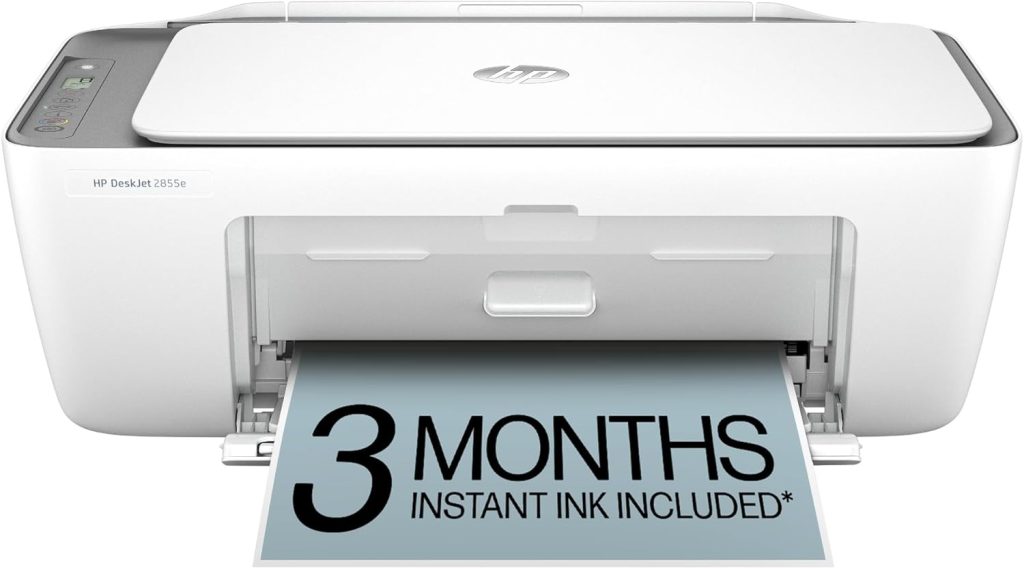
Any regular home printer is fine for shipping labels. Don’t feel pressured into buying a label printer yet.
- Inkjet works
- Laser works
- Black and white is totally fine
You can even print labels and tape them on. Ugly but effective.
Later, when you’re shipping daily, get a label printer to save time. But don’t buy it too early.
Poly Mailers

If you’re shipping clothing or anything soft, use poly mailers. They’re cheap, light, waterproof, and fast.
Start with 9×12 or 10×13.
Buy in bulk to reduce cost.
This is your everyday workhorse.
Boxes (Assorted Sizes)
For tools, electronics, collectibles, and anything breakable or rigid, you’ll need boxes.
Don’t buy every size on Amazon like a rookie.
Do this instead:
- Ask friends and family who work in warehouses
- Save your own shipment boxes
- Reuse clean boxes whenever possible
Free supplies = more profit.
In fact, don’t buy any boxes until you make a sale and know exactly what type of box you’ll need.
In time, you’ll know exactly which size boxes to stock.
Packing Paper / Bubble Wrap
Your job is to stop movement inside the box.
Rolled newspaper is cheaper and easier than packing peanuts.
Bubble wrap is for delicate items or electronics.
The rule is simple:
If the item moves when you shake the box, you’re not done.
Stuff it until nothing shifts.
Packing Tape

Do not cheap out on tape.
Cheap tape peels, splits, and wastes time.
A big roll of heavy-duty packing tape (Costco, Sam’s Club, or Amazon) will last and won’t piss you off.
Start Simple
That’s it.
No fancy gear. No overbuying. No wasted money.
If you stick to:
- A scale
- A tape measure
- A printer
- Poly mailers
- A few boxes
- Packing paper
- Heavy-duty tape
…you are fully equipped to ship like a pro.
How to Pack Clothing (The Fast, Clean, Cheap Way)
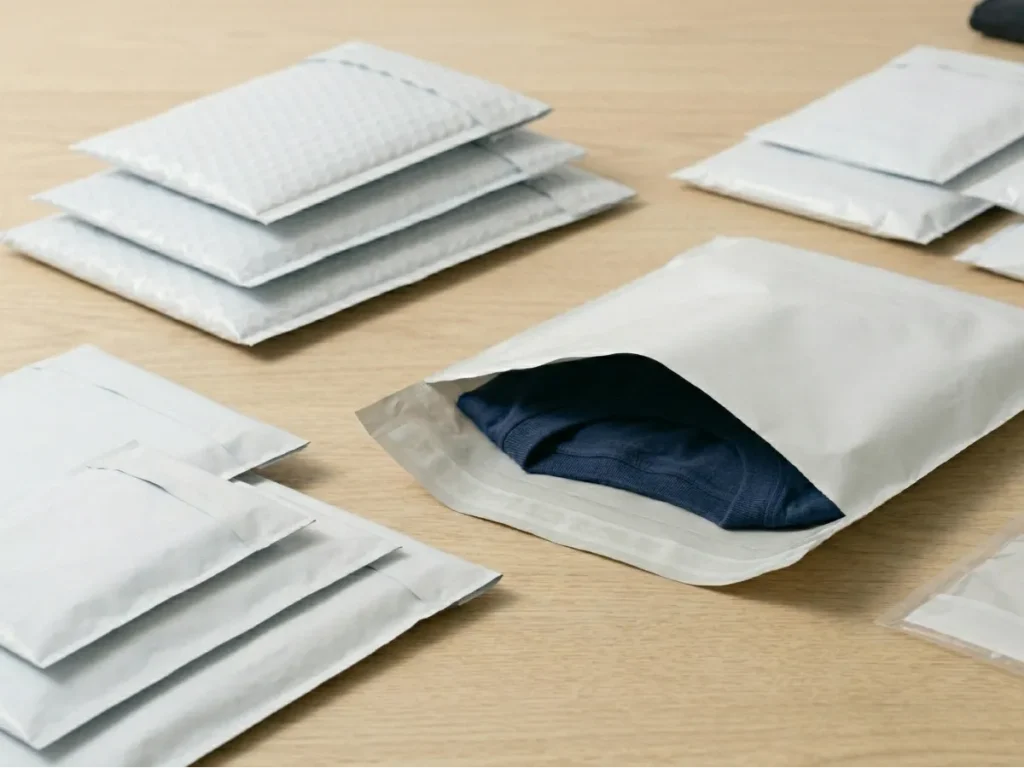
Clothing is the easiest category to ship. Here’s the method:
- Fold the item cleanly.
- Put that inside a poly mailer bag.
- Tape once, label, done.
No box. No bubble wrap. No overthinking.
Poly mailers are cheap, light, and fast.
Your goal is speed: list > bag > ship > move on.
How to Pack Physical Goods (Tools, Electronics, Collectibles, Etc.)
This is where rookies mess up.
The item should not move inside the box. If it shakes, it breaks.
Here’s the method:
- Choose a box just big enough for your item (too big means wasted filler + higher shipping).
- Wrap the item in bubble wrap (tight, not lazy).
- Use packing paper or old newspaper to fill empty space.
- Shake the box. If anything moves, add more paper.
Tips:
- Avoid packing peanuts if you can. They suck, get everywhere, and don’t stop bouncing.
- Rolled up paper is your best friend. I’ve shipped power tools, camera lenses, and glassware with nothing but tight wrapping and rolled paper.
Your goal: secure but not expensive.
Should You Charge Shipping or Offer Free Shipping?
This depends on the item.
Free shipping works best for:
- Clothing
- Small items under 1 lb
- Items with tons of competition
Why?
Because buyers filter by “Free Shipping,” and your listing will get pushed to the top of the results.
Charge shipping when:
- Items are heavy
- Items are large / bulky / awkward
- You’re selling something unique where competition doesn’t matter
The real move is simple:
Build shipping into the price.
Example:
- Shirt sells for $20 + $5 shipping
- You list it for $24.99 free shipping
Looks better. Buyer feels like they’re getting a deal.
eBay boosts you in search.
But for a 12 pound computer monitor?
Nah.
Charge shipping or you will destroy your profit margins.
How to Get Cheap or Free Shipping Supplies
This part matters.
The cost for shipping supplies add up fast and it will eat into your profits if you aren’t careful.
The best places to get cheap shipping supplies in bulk are the following:
Amazon
Amazon is a great place to buy shipping supplies in bulk because they always have products available and they can get to you within 1-2 days at the most.
ULine
ULine is the Amazon of business supplies. If you plan on buying 100+ of any shipping box or material, ULine is your best bet for good pricing.
Like Amazon, they can get stuff to you within 1-2 business days.
Costco / Sam’s Club
If you have a Costco or Sam’s membership you can get stuff like tape, labels, and mailers for great bulk prices right in store.
Friends / Family in Warehouses
Warehouses are a gold mine of free shipping material, and if you know anyone who works in one, you need to take advantage.
I worked in warehousing for a number of years while I sold on eBay and I always got free boxes and packing material constantly.
Companies throw out mountains of clean packaging every day.
It’s basically free money to eBay resellers so find a way to secure it.
Final Word
Once you get in rhythm, here’s what your workflow looks like:
- Items stored neatly and pre-bagged
- Shipping supplies stocked so you never run out
- Scale and tape ready to go
- Label printer ready (optional, but recommended)
You shouldn’t be scrambling.
Scrambling wastes time.
Time wasted is money burned.
Most people fail at shipping because they don’t respect it.
But shipping is where your profit is protected.
Strong men build systems.
Systems create consistency.
Consistency builds income.
Dial this in early and shipping becomes automatic.
Then you spend your energy where it matters:
That’s how you build a real flipping operation.